

In a world of endless noise, stillness is becoming the ultimate form of power.
We weren’t built for this much signal. Notifications, newsfeeds, content loops; our nervous systems are now processing more stimulus in a single day than our ancestors encountered in a year. Yet somehow, within this accelerating chaos, stillness is staging a quiet revolution. No branding. No broadcast. Just space.
The most discerning minds of our time, thinkers, artists, even business leaders, are beginning to treat silence as infrastructure, not absence. And increasingly, we’re seeing a shift: away from visibility, toward serenity. From broadcasting, to being. In this context, stillness is no longer passive. It’s performative. A declaration of control in a culture designed to distract you.
But what exactly is stillness?
It’s not the absence of action. It’s the presence of depth. Stillness is the moment after the exhale. The pause between thoughts. The decision not to scroll, not to reply, not to fill the space. It is mental spaciousness, a state so rare, it’s now considered a luxury.
Research from the University of Pittsburgh (2018) shows that even 15 minutes of intentional silence per day can measurably reduce cortisol levels and improve cognitive performance. In Japan, “forest bathing” (shinrin-yoku) is now prescribed by doctors as a wellness practice. And leading tech CEOs, ironically, those most responsible for noise, are investing heavily in silent retreats, attention-training, and offline sanctuaries.
Stillness is becoming currency. The fewer demands on your attention, the richer you are.
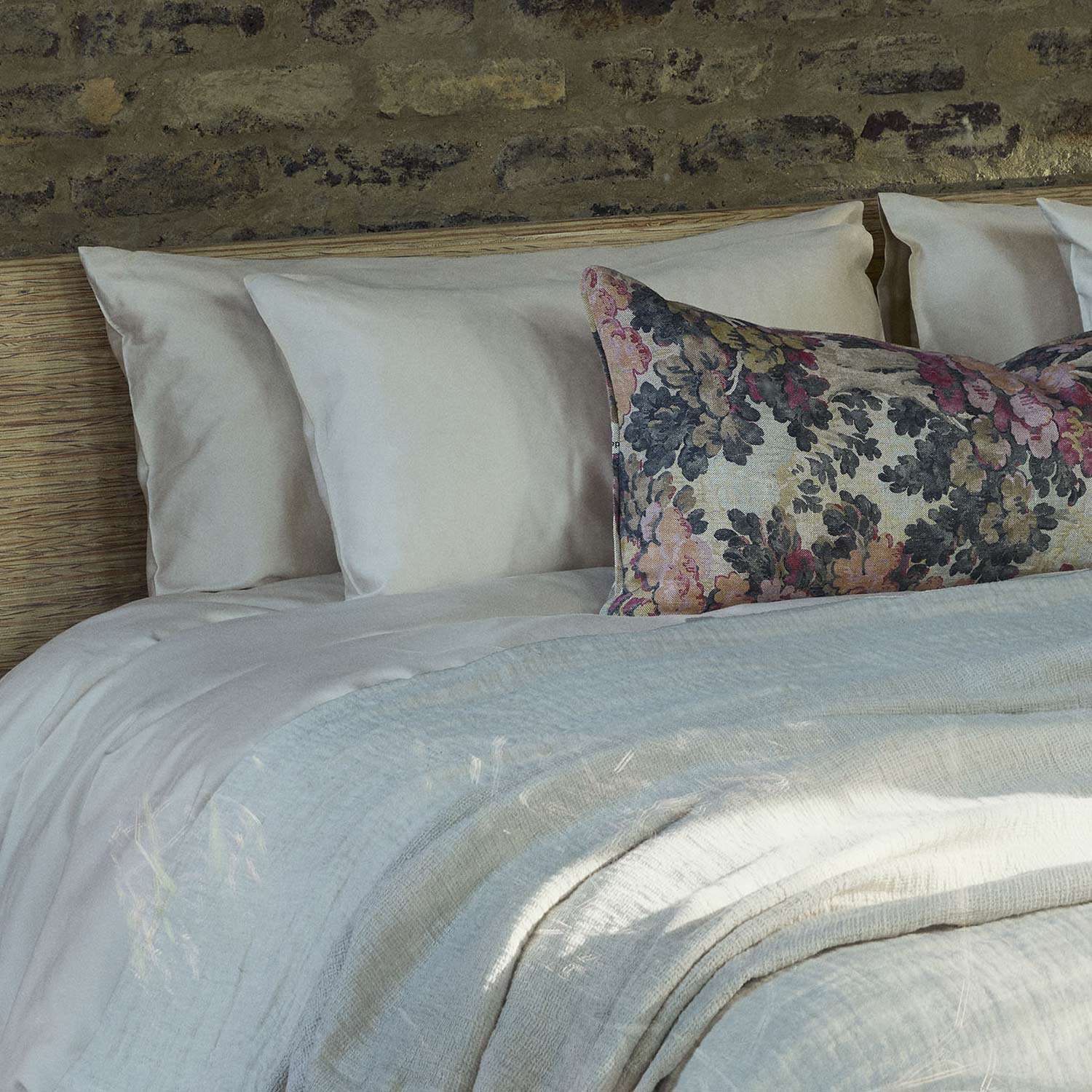
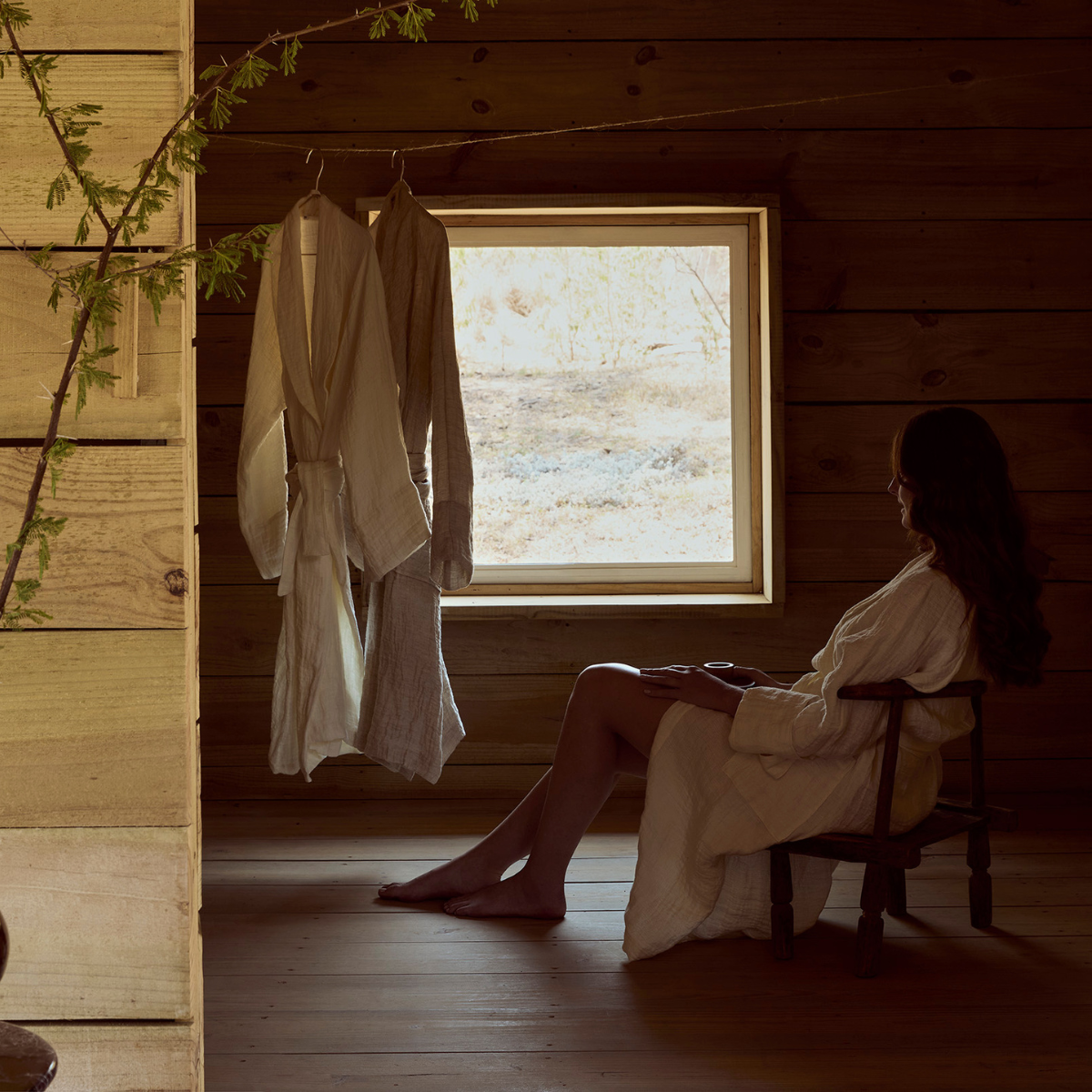
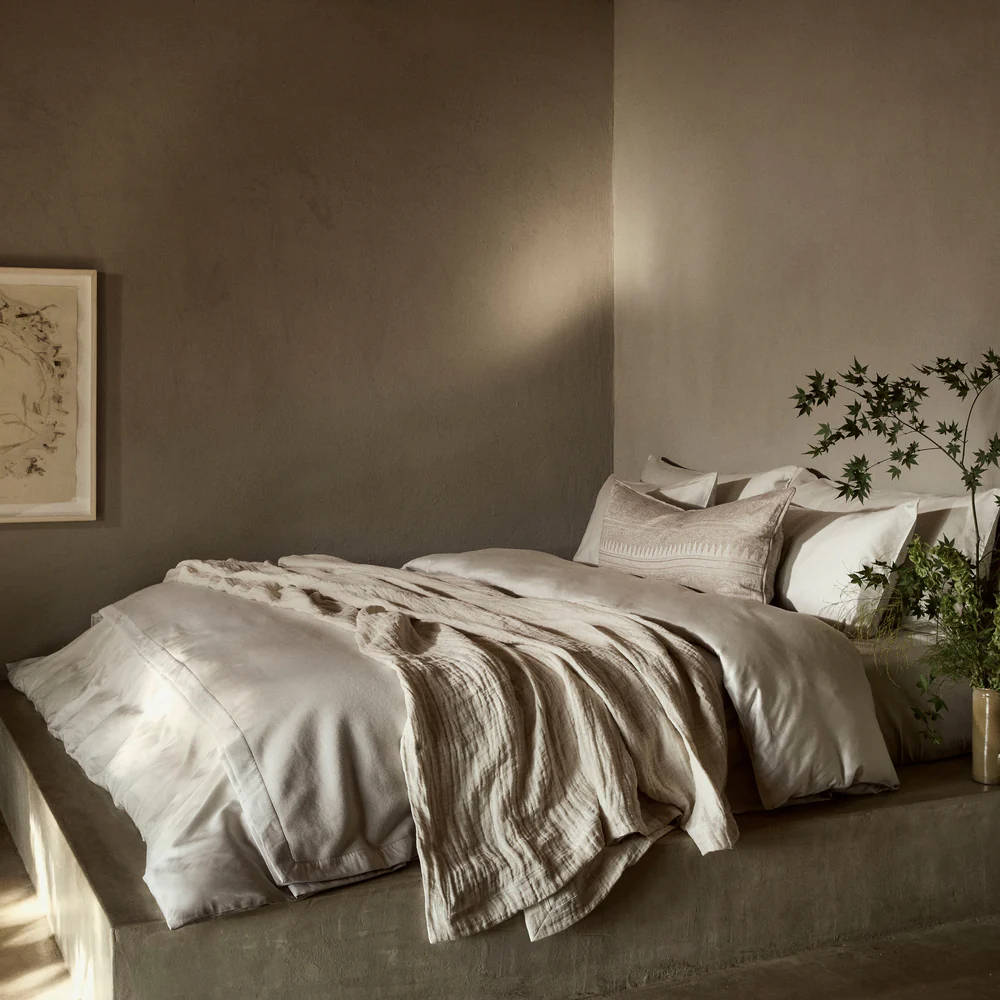
In the home, stillness begins with how we shape space. It’s in the way light falls on a pale wall. The way linen catches the air, softens a corner, sways ever so slightly. It’s in furniture that asks nothing of you. In the absence of clutter. In the intentional use of texture to invite pause, not stimulation. Linen is one of the few materials that feels like quiet: matte, breathable, grounded. It doesn’t reflect light or scream for attention. It just is. Like silence.
Stillness also exists in ritual. In the rhythm of making a bed with care. Of folding sheets slowly. Of stretching across cool fabric first thing in the morning. These are acts of physical stillness, the body’s way of marking a return to self. They don’t need to be efficient. They need to be present.
Architect and theorist John Pawson once wrote, “The richness of minimalism is not in what it lacks, but in what it allows.” Stillness is the same. It is not void, it is vessel.
At STARCH, we don’t believe in filling rooms. We believe in revealing them. In removing the unnecessary so that the essential can breathe. A space that gives you back your breath is one that serves more than aesthetics, it serves your nervous system.
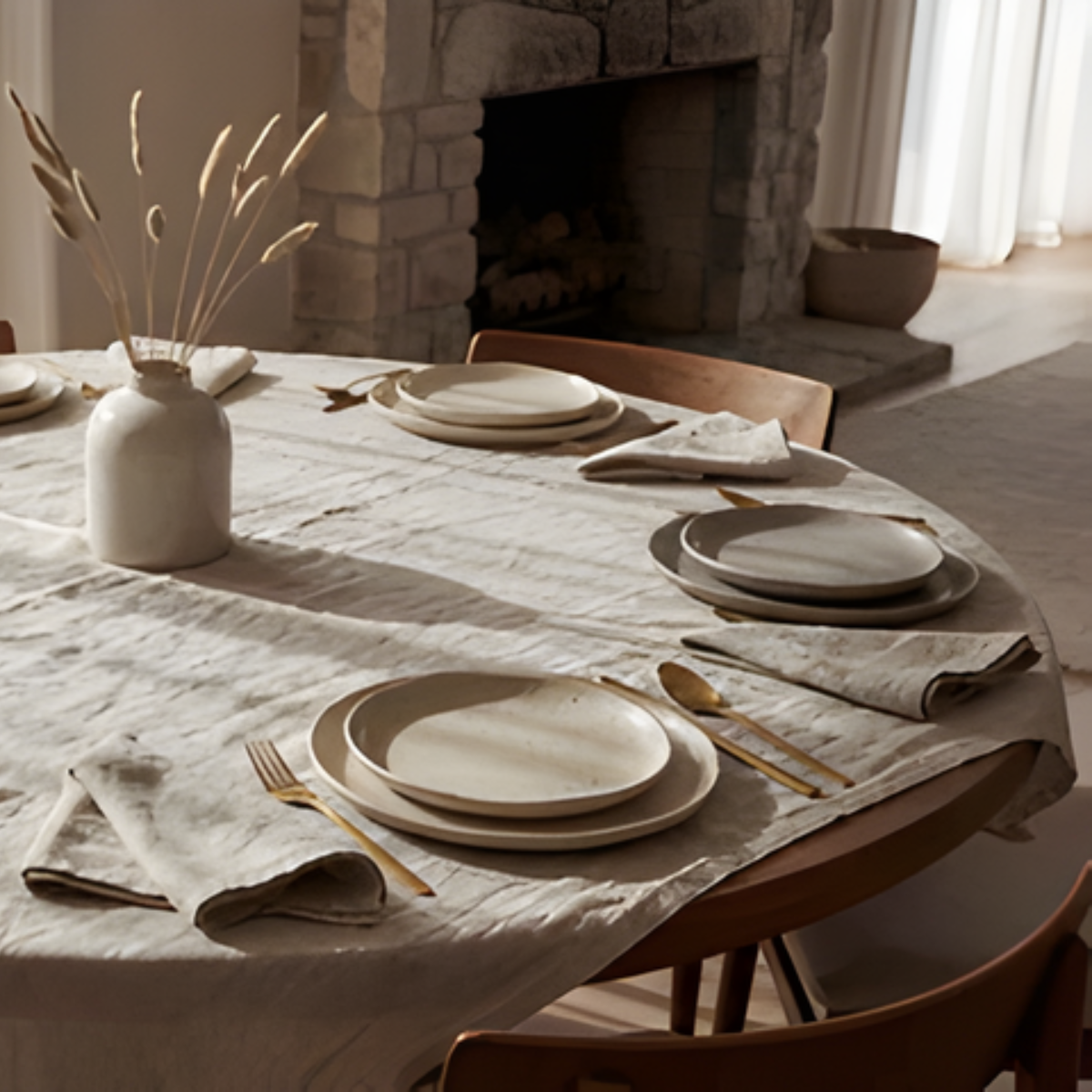
And that’s the hidden truth: stillness is design. It is a designed condition. A quiet bedroom. An uncluttered dining table. A single window left open. Stillness doesn’t happen by accident, it’s curated, protected, and deeply felt.
So ask yourself: when was the last time you allowed silence to linger? When was the last time your home gave you permission not to react?
You don’t need to move to the mountains. You just need to move toward intention.
Start with breath. Then light. Then linen. The rest will follow.
Connect with us


